

How Foreign Investors Can Invest in the Tehran Stock Exchange (TSE): A Complete Guide
Introduction
Iran is home to one of the largest capital markets in the Middle East, with hundreds of publicly traded companies 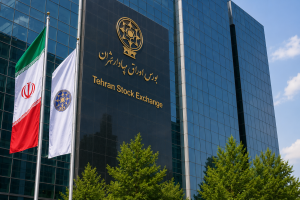 spanning industries such as petrochemicals, steel, mining, banking, pharmaceuticals, telecommunications, automotive manufacturing, and consumer goods. Despite facing ecohttp://tasavi.ir/wp-content/uploads/2026/06/tse4-300×200.pngnomic sanctions and geopolitical challenges over the past decades, the Iranian capital market has continued to play a vital role in financing businesses and supporting economic growth.
For international investors, the Tehran Stock Exchange (TSE) represents a unique investment destination. The market provides access to companies operating in an economy rich in natural resources, a population of more than 90 million people, and industries that are often unavailable through other regional stock exchanges. http://tasavi.ir/wp-content/uploads/2026/06/tse4-300×200.png
Many foreign investors are surprised to learn that Iran’s capital market is legally open to non-Iranian individuals and institutions. Foreign nationals may purchase shares of listed companies, invest in investment funds, and participate in the Iranian securities market, provided they comply with the country’s investment regulations and complete the required registration procedures.http://tasavi.ir/wp-content/uploads/2026/06/tse2-300×200.png
This guide explains how foreign investors can legally invest in the Tehranhttp://tasavi.ir/wp-content/uploads/2026/06/tse3-300×200.png Stock Exchange, outlines the regulatory framework governing foreign participation, and describes the practical steps required before placing the first trade.
Understanding Iran’s Capital Market
http://tasavi.ir/wp-content/uploads/2026/06/tse1-300×200.png
Before investing, it is important to understand that the Iranian capital market consists of several regulated exchanges, each serving different segments of the economy.
The Tehran Stock Exchange (TSE) is the country’s primary stock market and lists many of Iran’s largest and most established companies. These include firms operating in energy, petrochemicals, metals, mining, banking, insurance, pharmaceuticals, telecommunications, food production, and industrial manufacturing.
Alongside the TSE is the Iran Fara Bourse (IFB), which serves smaller companies, newly established businesses, fixed-income securities, exchange-traded funds (ETFs), and various financial instruments. Some companies begin trading on the IFB before eventually qualifying for listing on the Tehran Stock Exchange.
Iran’s capital market also includes the Iran Mercantile Exchange (IME), where industrial commodities, metals, agricultural products, and raw materials are traded, and the Iran Energy Exchange (IRENEX), which specializes in electricity and energy-related products.
Together, these exchanges form a comprehensive capital market supervised by a single national regulator.
Is Foreign Investment Allowed?
One of the most common questions asked by international investors is whether foreigners are legally permitted to purchase Iranian stocks.
The answer is yes.
Iranian law allows foreign natural persons, companies, investment funds, financial institutions, and other legal entities to invest in securities listed on regulated exchanges.
Unlike some emerging markets that impose strict nationality restrictions, Iran has established legal procedures specifically designed to facilitate foreign participation in its capital market.
Foreign investors may purchase:
- Common shares
- Exchange-Traded Funds (ETFs)
- Certain debt securities
- Sukuk (Islamic bonds)
- Other approved financial instruments
However, foreign investors must first obtain the necessary identification and trading authorization before they can buy or sell securities.
The Legal Framework for Foreign Investment
Foreign investment in Iran’s securities market is governed by several laws and regulations designed to balance investor access with market stability and regulatory oversight.
The primary legal foundation is the Capital Market Law of the Islamic Republic of Iran, which establishes the regulatory framework for securities markets, licensing requirements, disclosure obligations, investor protection, and market supervision.
In addition, the Foreign Investment Promotion and Protection Act (FIPPA) provides a broader legal framework for foreign investment in Iran. Although FIPPA is primarily associated with direct foreign investment, it also reflects the country’s policy of encouraging international participation in the Iranian economy under defined legal conditions.
The Iranian capital market is supervised by the Securities and Exchange Organization (SEO), which regulates exchanges, brokerage firms, investment funds, listed companies, and other market participants.
The SEO is responsible for:
- Licensing brokerage firms
- Supervising securities exchanges
- Monitoring market activity
- Protecting investors
- Enforcing disclosure requirements
- Preventing market manipulation and insider trading
- Issuing regulations governing foreign investors
All licensed brokerage firms operating in Iran are required to comply with these regulations.
Who Can Invest?
Foreign participation is not limited to multinational corporations or institutional investors.
Eligible investors generally include:
Individual Investors
Any non-Iranian individual who satisfies the identification requirements may apply for permission to trade securities in Iran.
This includes:
- Private investors
- Business owners
- Entrepreneurs
- Portfolio investors
- Long-term investors
Nationality alone does not determine eligibility, although applicants must comply with Iranian laws and applicable international regulations.
Corporate Investors
Foreign companies may also invest in Iranian securities.
Examples include:
- Holding companies
- Investment companies
- Asset management firms
- Pension funds
- Insurance companies
- Family offices
- Sovereign investment entities
Corporate applicants typically submit additional incorporation documents and evidence demonstrating legal authorization to invest.
Institutional Investors
Banks, mutual funds, exchange-traded funds, universities, charitable foundations, and other institutional investors may also participate, subject to applicable regulations.
Because institutional investments are often significantly larger than retail investments, regulators may require additional documentation regarding ownership structure, governance, and source of funds.
Obtaining a Foreign Investor Trading Code
Before purchasing any security listed on the Tehran Stock Exchange or Iran Fara Bourse, every foreign investor must obtain a Foreign Investor Trading Code.
This code functions similarly to a unique investor identification number and allows the market infrastructure to identify each investor accurately.
Without this trading code, no securities transaction can be executed.
Fortunately, investors usually do not need to apply directly to the Securities and Exchange Organization. Instead, a licensed Iranian brokerage firm normally manages the application process on behalf of the client.
Documents Required
Although documentation requirements may vary slightly depending on the brokerage firm and the investor’s legal status, individual applicants are generally expected to provide: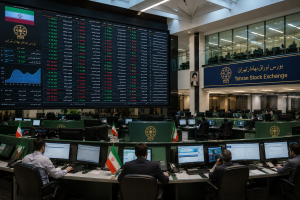
- A valid passport
- A completed investor identification form
- Passport-sized photographs (if requested)
- Contact information
- Specimen signature
- Anti-money laundering (AML) documentation
- Know Your Customer (KYC) information
Corporate applicants generally provide additional documents such as:
- Certificate of incorporation
- Articles of association
- Board resolution approving the investment
- Authorized signatory documents
- Ownership structure
- Company registration certificates
Depending on the jurisdiction in which the investor is incorporated, some documents may need to be notarized, legalized, or translated into Persian.
Opening an Account with a Licensed Brokerage
Once the required documents have been prepared, the investor selects a licensed brokerage firm operating in Iran.
The brokerage acts as the primary intermediary between the investor and the stock exchange.
Its responsibilities typically include:
- Assisting with investor registration
- Obtaining the foreign trading code
- Opening the securities account
- Executing buy and sell orders
- Providing trading platform access
- Maintaining client records
- Offering market research and investment support
Many brokerage firms also provide online trading platforms that allow investors to monitor portfolios, submit orders, review transaction history, and access market information electronically.
Choosing a brokerage with experience serving international clients can significantly simplify the registration process and improve communication regarding documentation, reporting, and regulatory requirements.
Due Diligence Before Investing
Receiving a trading code is only the first step. Successful investing requires careful research and disciplined decision-making.
Before investing in any listed company, foreign investors should evaluate:
- Financial statements
- Profitability trends
- Dividend history
- Industry outlook
- Corporate governance
- Debt levels
- Exchange rate exposure
- Commodity price sensitivity
- Management quality
- Regulatory risks
Understanding the broader Iranian economy—including inflation, monetary policy, fiscal policy, and international developments—is equally important when assessing investment opportunities.
Rather than relying solely on short-term price movements, experienced investors typically combine macroeconomic analysis with company-specific research to build a well-diversified portfolio.
Funding Your Investment Account
After obtaining a Foreign Investor Trading Code and opening an account with a licensed brokerage firm, the next step is funding your investment account.
Unlike many international markets, funding an investment account in Iran requires careful planning because the Iranian financial system is affected by international banking restrictions and sanctions. As a result, direct international bank transfers may not always be available for every investor or from every jurisdiction.
The procedures for transferring investment funds depend on several factors, including:
- The investor’s country of residence
- Applicable international regulations
- Banking relationships
- Iranian foreign exchange regulations
- The brokerage firm’s internal procedures
For this reason, investors should always consult their brokerage firm before transferring funds. A licensed broker can explain the currently available methods, required documentation, and applicable regulatory requirements.
Because regulations may change over time, investors should avoid relying on outdated information obtained from unofficial sources.
Placing Your First Trade
Once the investment account has been funded and activated, investors may begin buying and selling securities listed on the Tehran Stock Exchange or Iran Fara Bourse.
Most brokerage firms provide electronic trading platforms that allow investors to:
- Search listed companies
- View live market prices
- Submit buy and sell orders
- Monitor portfolio performance
- Review transaction history
- Receive market announcements
- Access financial reports
Orders are executed according to exchange rules and market conditions. As in other stock exchanges, execution depends on available buyers, sellers, and prevailing market prices.
Trading Hours
The Tehran Stock Exchange follows Iran’s official business week.
Trading is generally conducted from Saturday through Wednesday, while Thursday and Friday are non-trading days.
Trading sessions may include:
- Pre-opening session (8:45 am to 9:00) Iran Standard Time.
- Order matching (9:00 AM)
- Continuous trading (9:00 AM to 12:30)
- Market close (12:30 PM)
The exchange may revise trading schedules, holiday calendars, or trading hours. Investors should therefore verify the latest timetable through their brokerage firm or the official exchange announcements.
Settlement of Transactions
When securities are purchased or sold, ownership does not transfer instantly.
Like most organized exchanges, transactions are settled according to the market’s settlement cycle.
Settlement includes:
- Transfer of securities
- Transfer of funds
- Updating shareholder records
- Recording ownership within the central securities depository
Understanding settlement timing is particularly important for investors planning frequent trading or cash withdrawals.
Shareholder Rights
Foreign investors generally enjoy the same ownership rights as domestic shareholders unless a specific law or regulation provides otherwise.
Shareholders may benefit from:
- Dividend payments
- Capital gains
- Participation in capital increases
- Bonus share distributions
- Voting rights (where applicable)
- Access to corporate disclosures
- Annual reports
- Shareholder meetings
Companies listed on regulated exchanges are required to publish periodic financial statements and disclose material events that may influence investment decisions.
These disclosure requirements contribute to market transparency and help investors evaluate corporate performance.
Dividends
Many companies listed on the Tehran Stock Exchange distribute cash dividends annually.
Dividend policies vary depending on:
- Company profitability
- Board recommendations
- Shareholder approval
- Industry conditions
- Capital expenditure plans
Historically, many Iranian listed companies have maintained relatively high dividend payout ratios compared with companies in some developed markets, making dividend income an important consideration for long-term investors.
Investors should remember that dividend payments are not guaranteed and may vary significantly from year to year.
Capital Increases
Iranian listed companies frequently raise capital through several methods.
These may include:
- Retained earnings
- Cash contributions from shareholders
- Asset revaluation
- Combination of multiple methods
Participation rules differ depending on the type of capital increase.
Foreign investors should carefully review company announcements before deciding whether to participate in new share subscriptions.
Taxes and Transaction Costs
One advantage frequently noted by investors is the relatively straightforward taxation of stock transactions in Iran.
Transaction costs generally include:
- Brokerage commissions
- Exchange fees
- Regulatory fees
- Settlement charges
- Applicable taxes
The exact fee structure is determined by market regulations and may change periodically.
Investors should request a complete schedule of current charges from their brokerage before beginning to trade.
Professional investors should also seek independent tax advice regarding any reporting obligations that may exist in their own country of residence.
Investment Restrictions
Although Iran welcomes foreign participation in its capital market, certain investment restrictions may apply.
Depending on applicable regulations, restrictions may involve:
- Ownership limits in specific companies or sectors
- Strategic industries
- Regulatory approvals
- National security considerations
- Market concentration rules
These limitations are intended to maintain market stability and protect sectors considered strategically important.
Investors should verify whether any restrictions apply before making substantial investments.
Risks Every Foreign Investor Should Understand
Every investment carries risk, and investing in Iran is no exception.
Foreign investors should carefully evaluate both company-specific risks and broader macroeconomic factors.
Important risks include:
Currency Risk
Exchange rate fluctuations may significantly affect investment returns when profits are converted into foreign currencies.
Inflation
Iran has experienced periods of relatively high inflation.
Inflation influences:
- Corporate earnings
- Consumer demand
- Interest rates
- Asset valuations
Market Volatility
Stock prices may fluctuate substantially over short periods.
Political developments, economic policy changes, commodity prices, and investor sentiment can all influence market performance.
Regulatory Risk
Financial regulations evolve over time.
Changes affecting taxation, disclosure requirements, foreign ownership rules, or market operations may influence investment outcomes.
Geopolitical Risk
International sanctions and geopolitical developments can affect financial markets, capital flows, and economic activity.
Foreign investors should remain informed about international developments that could influence the Iranian economy.
Liquidity Risk
While many large companies enjoy active trading, some smaller companies may have lower trading volumes, making it more difficult to buy or sell large positions quickly.
Why Investors Consider the Tehran Stock Exchange
Despite these risks, many investors continue to study the Iranian stock market because of its distinctive characteristics.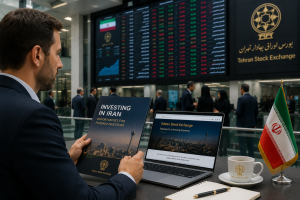
Some of its potential attractions include:
- Exposure to one of the Middle East’s largest economies
- Large domestic consumer market
- Abundant natural resources
- Significant petrochemical and mining industries
- Relatively diverse listed sectors
- Historically strong dividend-paying companies
- Long operating history
- Broad industrial base
Investors seeking diversification sometimes view Iran as a frontier or emerging market opportunity, although each investment decision should be based on careful research and an individual assessment of risk.
Best Practices Before Investing
Before allocating capital to the Iranian stock market, experienced investors generally follow several important principles.
Diversify Your Portfolio
Avoid concentrating investments in a single company or industry.
Diversification can help reduce exposure to sector-specific risks.
Study Financial Statements
Read annual reports, quarterly financial statements, and management discussions before investing.
Monitor Macroeconomic Conditions
Economic indicators such as inflation, exchange rates, interest rates, oil prices, and government policies may significantly affect market performance.
Understand Corporate Governance
Evaluate board structure, ownership concentration, transparency, and management quality.
Work with a Reputable Brokerage
Choose a licensed brokerage firm with experience assisting foreign investors and providing reliable client support.
Keep Records
Maintain complete documentation of investments, transactions, tax records, and regulatory correspondence.
Step-by-Step Checklist for Foreign Investors
For convenience, the entire investment process can be summarized as follows:
- Research the Iranian capital market.
- Select a licensed Iranian brokerage firm.
- Prepare identification and supporting documents.
- Apply for a Foreign Investor Trading Code.
- Open a brokerage and securities account.
- Complete Know Your Customer (KYC) and Anti-Money Laundering (AML) procedures.
- Arrange funding in accordance with applicable regulations.
- Study companies before investing.
- Place buy and sell orders through the brokerage platform.
- Monitor your portfolio regularly.
- Stay informed about regulatory and market developments.
- Review your investment strategy periodically.
Frequently Asked Questions (FAQ)
۱٫ Can foreigners legally invest in the Tehran Stock Exchange?
Yes. Foreign individuals and legal entities are generally permitted to invest in securities listed on the Tehran Stock Exchange (TSE) and Iran Fara Bourse (IFB), subject to Iranian laws and regulations. Before trading, investors must obtain a Foreign Investor Trading Code and complete the required identification and compliance procedures through a licensed Iranian brokerage firm.
۲٫ Do I need to live in Iran to invest?
No. Iranian citizenship or permanent residency is not generally required to own shares in companies listed on the Tehran Stock Exchange. However, investors must satisfy identification requirements and comply with all applicable regulations.
۳٫ What is a Foreign Investor Trading Code?
A Foreign Investor Trading Code is a unique identification number issued for non-Iranian investors. It enables the Central Securities Depository and market participants to identify investors and record securities ownership.
Without this code, investors cannot buy or sell securities on the Iranian stock market.
۴٫ How do I obtain a Foreign Investor Trading Code?
In most cases, the application is submitted by a licensed Iranian brokerage firm on behalf of the investor.
Applicants typically provide identification documents, complete Know Your Customer (KYC) forms, and submit Anti-Money Laundering (AML) information before the application is processed.
۵٫ What documents are usually required?
Although requirements may vary depending on the brokerage firm and investor type, individual investors are commonly asked to provide:
- A valid passport
- Proof of address
- Contact information
- Signature specimen
- Completed KYC forms
- AML declarations
Corporate investors generally submit incorporation documents, board resolutions, ownership information, and evidence of authorized representatives.
۶٫ Can foreign companies invest in Iranian stocks?
Yes.
Foreign corporations, investment funds, financial institutions, insurance companies, pension funds, and other legal entities may invest in Iranian listed securities, provided they comply with applicable regulations and complete the required registration procedures.
۷٫ Can I buy every company listed on the Tehran Stock Exchange?
Most listed companies are available to qualified investors. However, certain companies or sectors may be subject to ownership limits or additional regulatory requirements.
Before making a substantial investment, investors should confirm whether any restrictions apply.
۸٫ Can foreigners invest in Exchange-Traded Funds (ETFs)?
Subject to applicable regulations and the specific characteristics of each fund, foreign investors may invest in many ETFs and other eligible financial instruments traded on Iran’s regulated exchanges.
Investors should review each fund’s prospectus and consult their brokerage firm before investing.
۹٫ Are dividends paid to foreign shareholders?
Yes.
If a listed company declares dividends, foreign shareholders are generally entitled to receive dividends in proportion to their share ownership, subject to applicable laws, company procedures, and regulatory requirements.
Dividend policies differ from one company to another.
۱۰٫ Are capital gains taxed?
The taxation of securities transactions is governed by Iranian tax laws and market regulations.
Investors should remember that tax obligations may also exist in their country of residence.
Professional tax advice is recommended before making cross-border investments.
۱۱٫ Can I repatriate my investment capital?
Iranian regulations provide mechanisms for the transfer of investment proceeds under certain legal conditions. However, the practical process may be affected by foreign exchange regulations, banking arrangements, sanctions, and other legal considerations.
Foreign investors should obtain professional legal and financial advice regarding the transfer of funds before investing.
۱۲٫ Which currency is used for trading?
Securities listed on the Tehran Stock Exchange are traded in Iranian Rials (IRR).
Foreign investors should understand that exchange rate fluctuations may significantly influence the value of their investments when measured in another currency.
۱۳٫ What industries dominate the Tehran Stock Exchange?
The Iranian stock market includes companies operating in numerous sectors, including:
- Petrochemicals
- Oil and gas services
- Steel
- Mining
- Banking
- Insurance
- Automotive manufacturing
- Pharmaceuticals
- Telecommunications
- Food and beverage
- Cement
- Investment holding companies
- Information technology
This diversity makes the market an important indicator of Iran’s overall economic performance.
۱۴٫ Is the Tehran Stock Exchange regulated?
Yes.
The Iranian capital market operates under the supervision of the Securities and Exchange Organization (SEO), which oversees exchanges, brokerage firms, listed companies, investment funds, and market participants.
The SEO is responsible for licensing, market surveillance, disclosure requirements, and investor protection.
۱۵٫ What are the main risks for foreign investors?
Foreign investors should carefully evaluate risks including:
- Market volatility
- Inflation
- Exchange rate fluctuations
- Regulatory changes
- Liquidity risk
- Geopolitical developments
- International sanctions
- Company-specific financial risks
No investment is risk-free, and investors should conduct independent research before making investment decisions.
۱۶٫ Can I invest online?
Many licensed brokerage firms provide electronic trading platforms that allow investors to submit orders, monitor portfolios, and access market information remotely.
The availability of online services may differ among brokerage firms.
۱۷٫ How can I choose a brokerage firm?
When selecting a brokerage, investors should consider:
- Licensing status
- Experience with international clients
- English-language support
- Online trading platform
- Research capabilities
- Customer service
- Fee structure
- Reputation
Working with an experienced brokerage can make the investment process significantly smoother.
۱۸٫ Is the Tehran Stock Exchange suitable for long-term investors?
Many investors view the Iranian stock market as a long-term investment opportunity because of its broad industrial base, large domestic economy, and numerous dividend-paying companies.
However, investment suitability depends on each investor’s objectives, risk tolerance, financial circumstances, and understanding of the market.
۱۹٫ Where can I find reliable information about Iranian listed companies?
Investors should rely primarily on official disclosures, audited financial statements, exchange announcements, and information provided through licensed market participants.
Using reliable sources helps investors make informed decisions and reduces the risk of relying on rumors or unofficial reports.
۲۰٫ What should I do before investing in Iran?
Before investing, you should:
- Learn how the Iranian capital market operates.
- Understand the applicable legal and regulatory framework.
- Select a licensed brokerage firm.
- Complete the required registration process.
- Evaluate investment risks carefully.
- Review company financial statements.
- Diversify your investments.
- Seek professional legal, financial, and tax advice where appropriate.
Conclusion
The Tehran Stock Exchange is one of the largest and most established capital markets in the Middle East, offering foreign investors access to a broad range of industries and publicly listed companies. While the market presents unique opportunities, it also operates within a distinct legal, regulatory, and economic environment that requires careful preparation and informed decision-making.
Foreign investors who take the time to understand the market structure, comply with regulatory requirements, conduct thorough due diligence, and work with qualified local professionals are better positioned to navigate the Iranian capital market successfully.
As regulations, market conditions, and international financial frameworks may change over time, investors should always rely on the latest official information and seek professional advice before making investment decisions.
Whether you are an institutional investor, a financial analyst, or an individual exploring new frontier markets, understanding the Tehran Stock Exchange is the first step toward evaluating the opportunities and challenges of investing in Iran’s capital market.
For more information please contact me at whatsapp and telegram: +989177822426
